
How to Photograph Your Venue So the 'Find Yourself' Traffic Actually Books You
by CWDH, 4 min reading time
by CWDH, 4 min reading time
Fáilte Ireland is spending over €10 million sending Irish short-break travellers to your part of the country. Before a single one of them walks through your door, they will do the same thing: open your website, your Google listing and your Instagram — and decide in about eight seconds whether you look worth the trip. For most venues, the photos make that decision, and for most venues, the photos are the weakest thing about the business. The food is better than the pictures. The rooms are better than the pictures. That gap is costing bookings, and closing it costs almost nothing.
You do not need a professional shoot to fix it (though one is worth it if the budget allows). A recent phone, an hour of thought, and the rules below will put you ahead of most of your competition.
Almost every bad venue photo has the same cause: wrong light. Flash flattens food, yellows walls and makes a lovely room look like a crime scene. Instead, shoot near a window in the morning or late afternoon, when the light is soft and angled. Turn the flash off, tap the screen to focus, and drag the exposure down slightly — photos that are a touch moody always beat photos that are washed out. If a room only looks good with the lamps on, shoot it at dusk with the lamps on: warm interior light against a blue evening window is the single most flattering shot a hospitality venue can take.
Nobody books a room because of a photograph of a wardrobe. They book the feeling: breakfast by the window, a pint by the fire, coffee on the terrace. So stage the frame the way a guest would experience it. Set the table properly — matching cutlery, a polished glass, a folded napkin — because a half-set table reads as a half-run venue. Pour the drink. Plate the dish the way it actually goes out on a busy Saturday, not a tortured version of it. One honest, appetising shot of your real food beats ten arty ones of food you never serve.

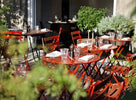
Most venues need surprisingly few photos — but they need the right six. The exterior in good light, so people recognise the building when they arrive. The best table in the house, set and lit. The breakfast — the most-searched, most-reviewed meal in Irish hospitality. The bar or lounge looking like somewhere you would happily lose an evening. One hero food shot and one hero drink shot. And, if you have outdoor space, the terrace on a bright day — it will be doing sales work all winter. Retire everything blurry, dark, or more than three years old. Ten great photos beat eighty mediocre ones every single time.
Before you press the button, look at the corners of the frame. The bin, the mop bucket, the stack of high chairs, the bundle of cables — the guest's eye finds them instantly. Straighten the vertical lines (turn on your phone's grid), shoot from chest height rather than above, and resist heavy filters: guests compare photos to reality on arrival, and disappointment is the most expensive emotion in hospitality. Your goal is not to look like somewhere else. It is to look exactly like yourself on your best day.
The best photos in Ireland are wasted if they are buried on page four of your website. Update your Google Business Profile first — it is where campaign traffic, map searches and "restaurants near me" queries actually land. Then your booking page, then social. Refresh seasonally: the terrace shot in April, the fire and the stew in October. A venue whose photos match the season looks alive; one whose snow-dusted banner is still up in June looks closed.
Marketing money is about to drive more Irish eyes over your online presence than at any point in years. The venues that convert that attention will not necessarily be the prettiest — they will be the ones that look cared for. An hour with your phone this week is the cheapest renovation you will ever do.


